70
Competition Ptniski Celje Center 4th Prize, 2025,
Celje, SLO
2025
Celje, SLO
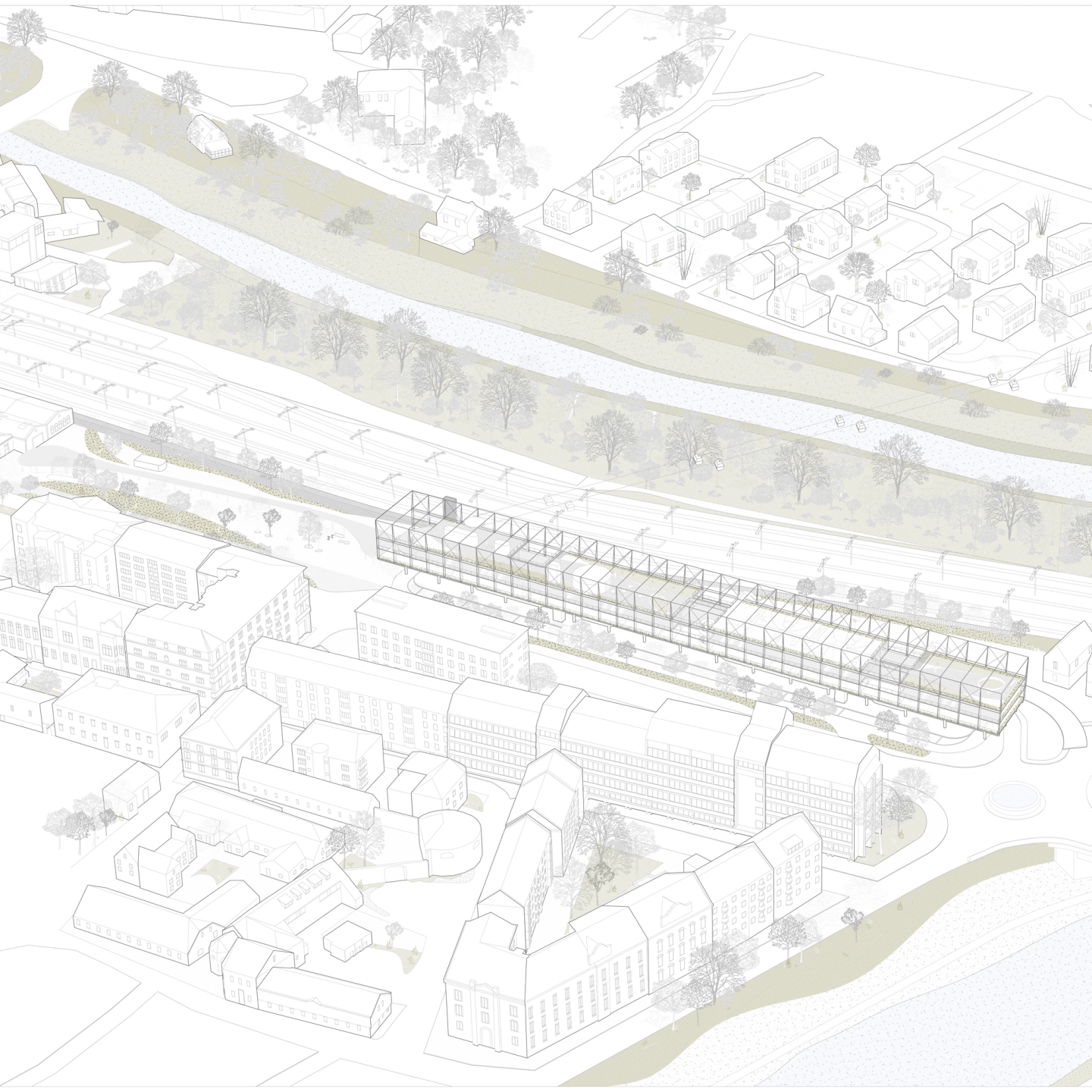
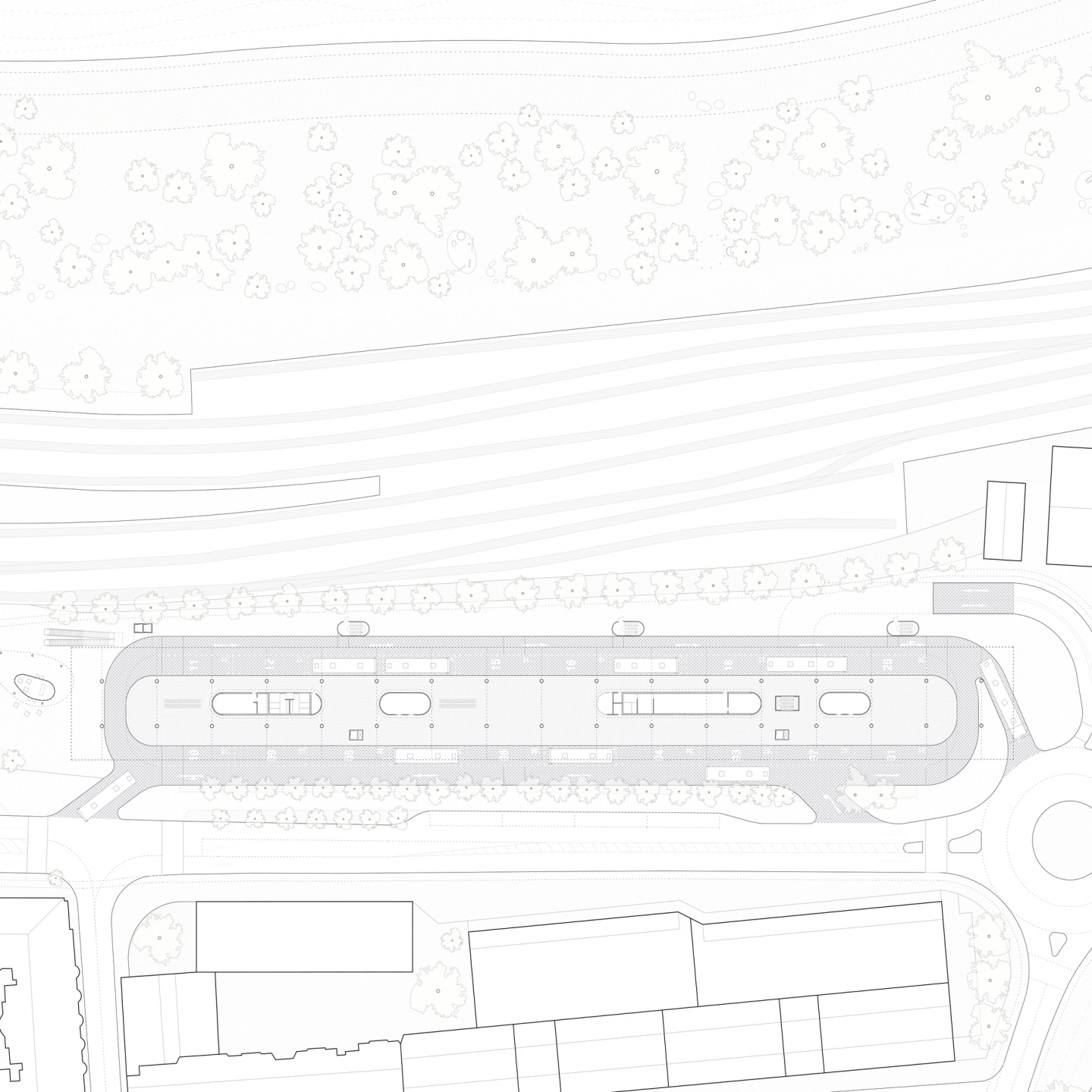
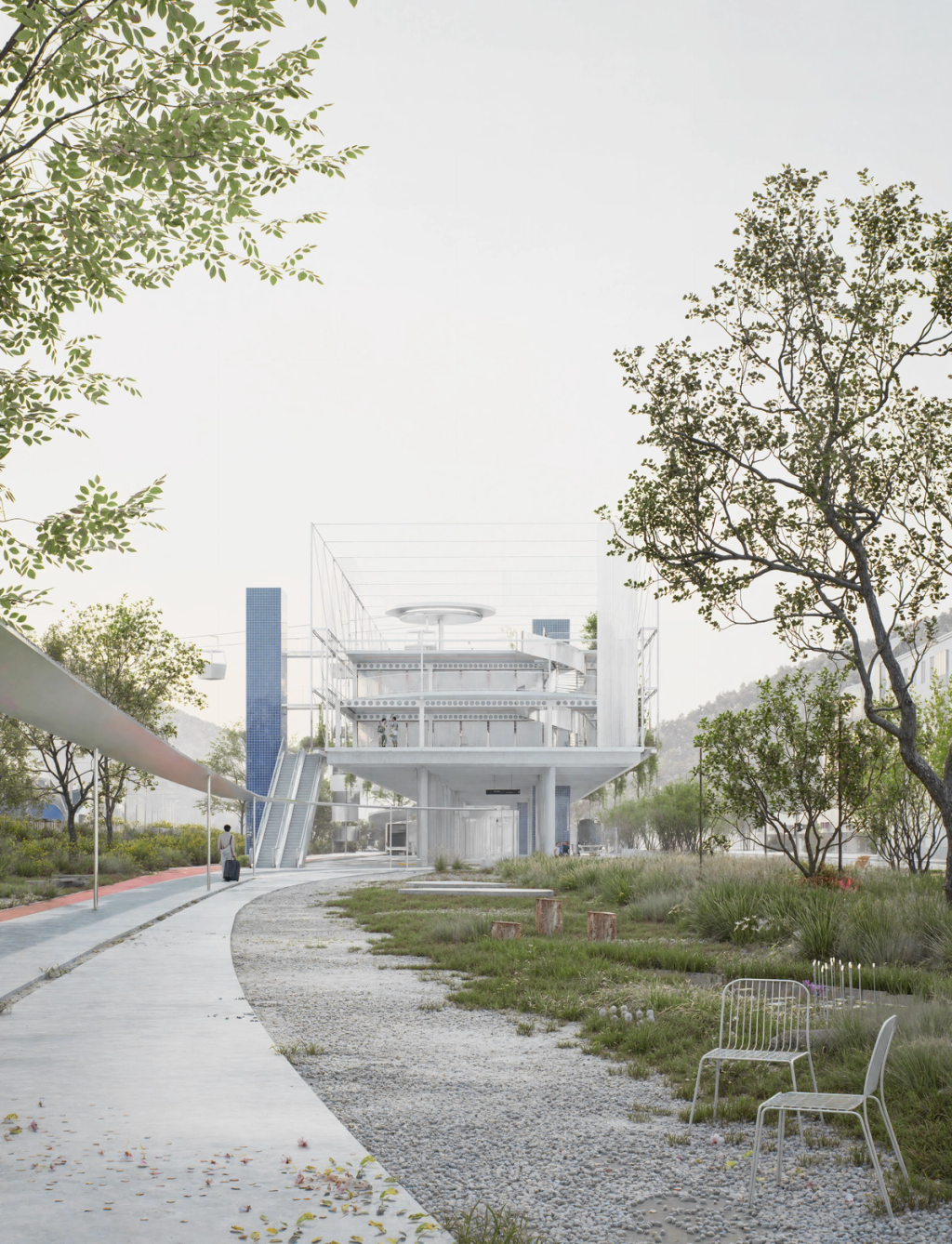
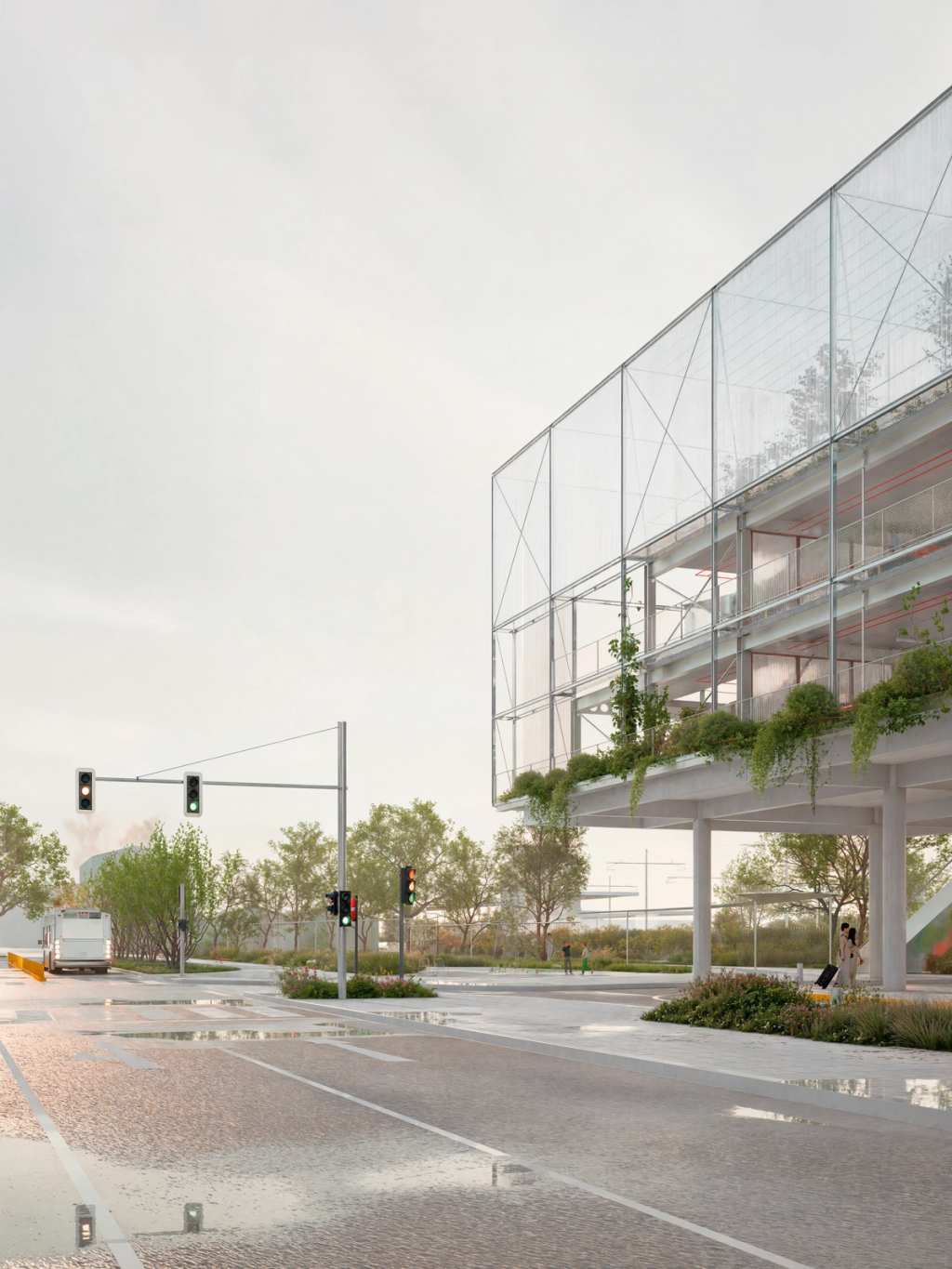
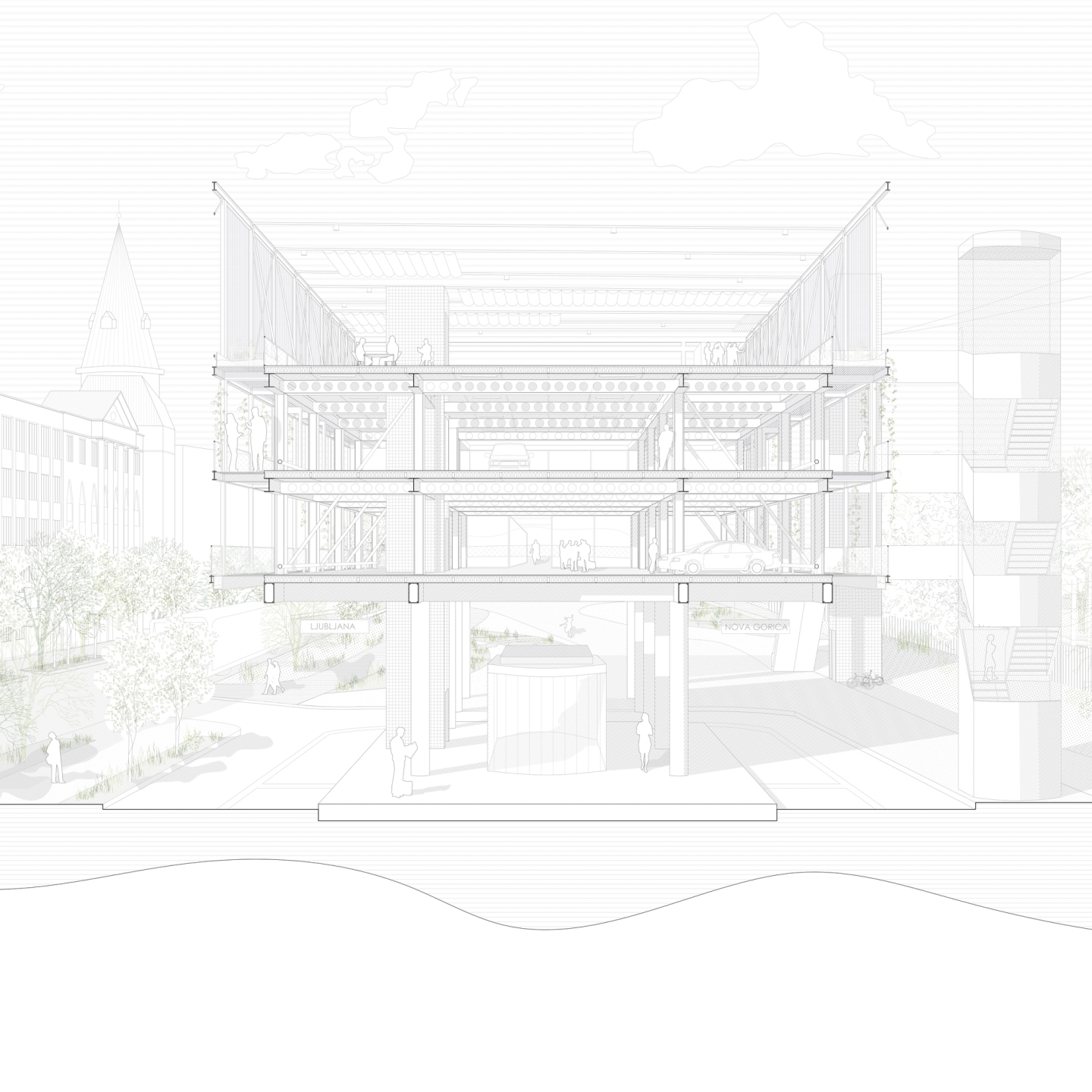
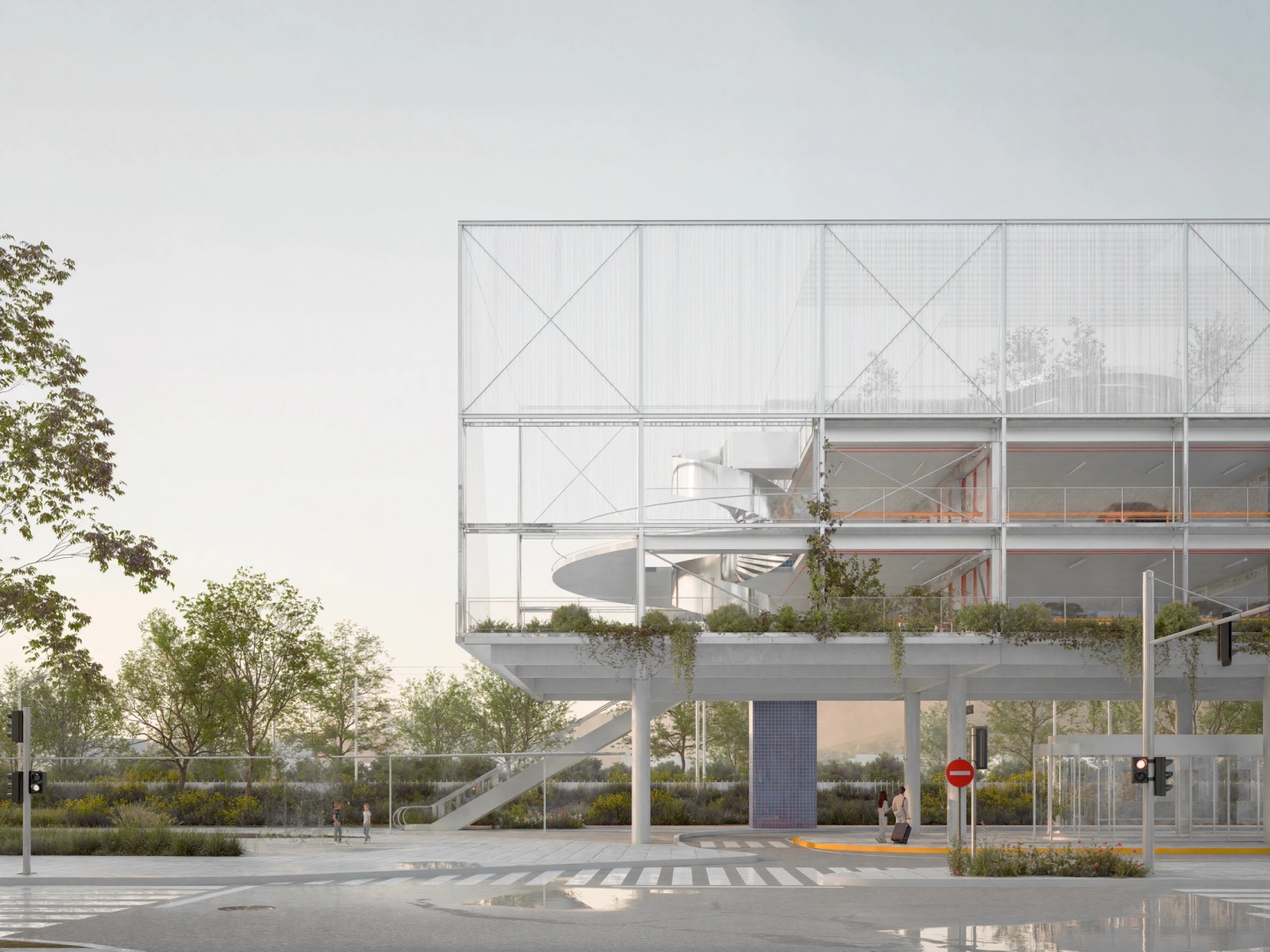
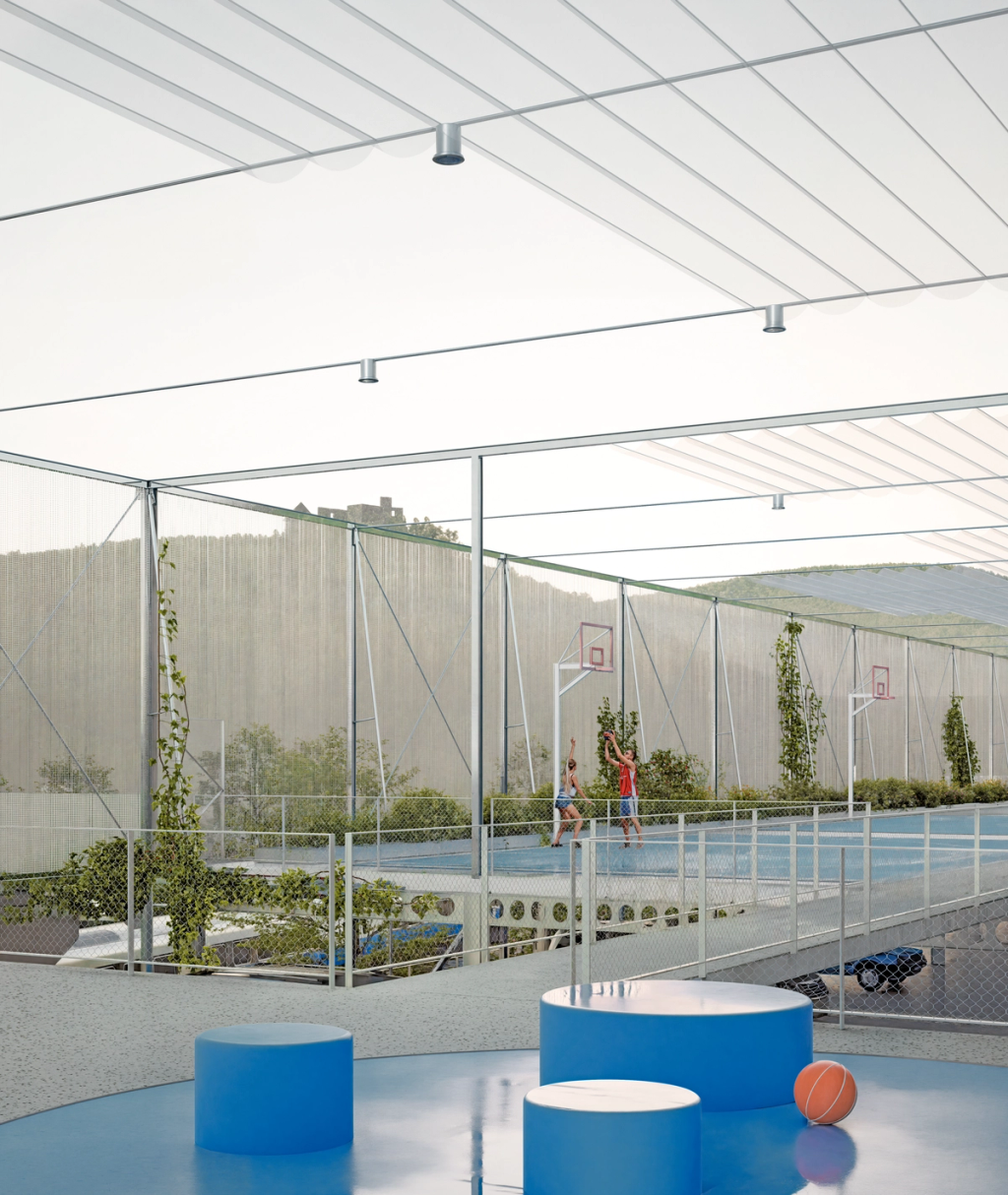
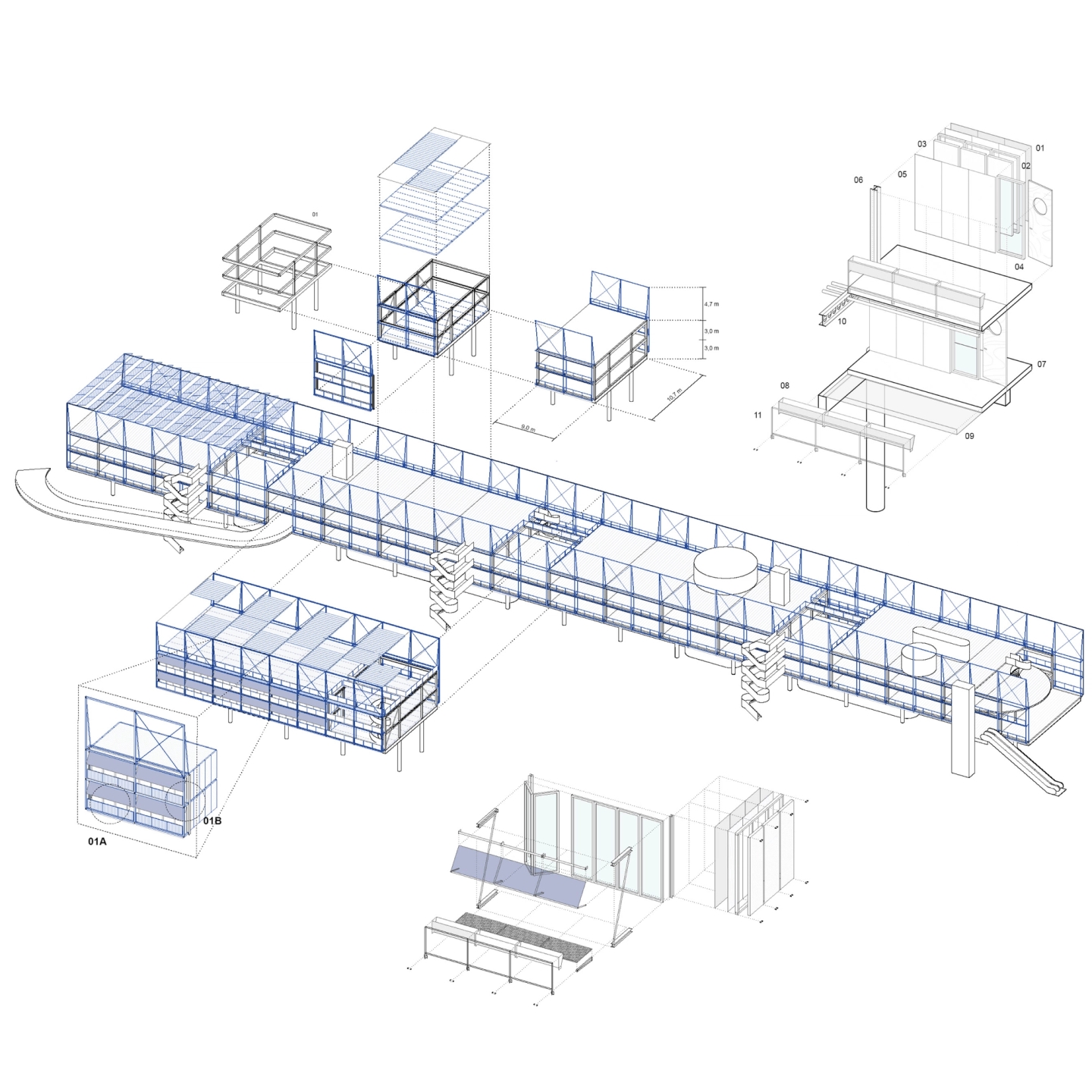
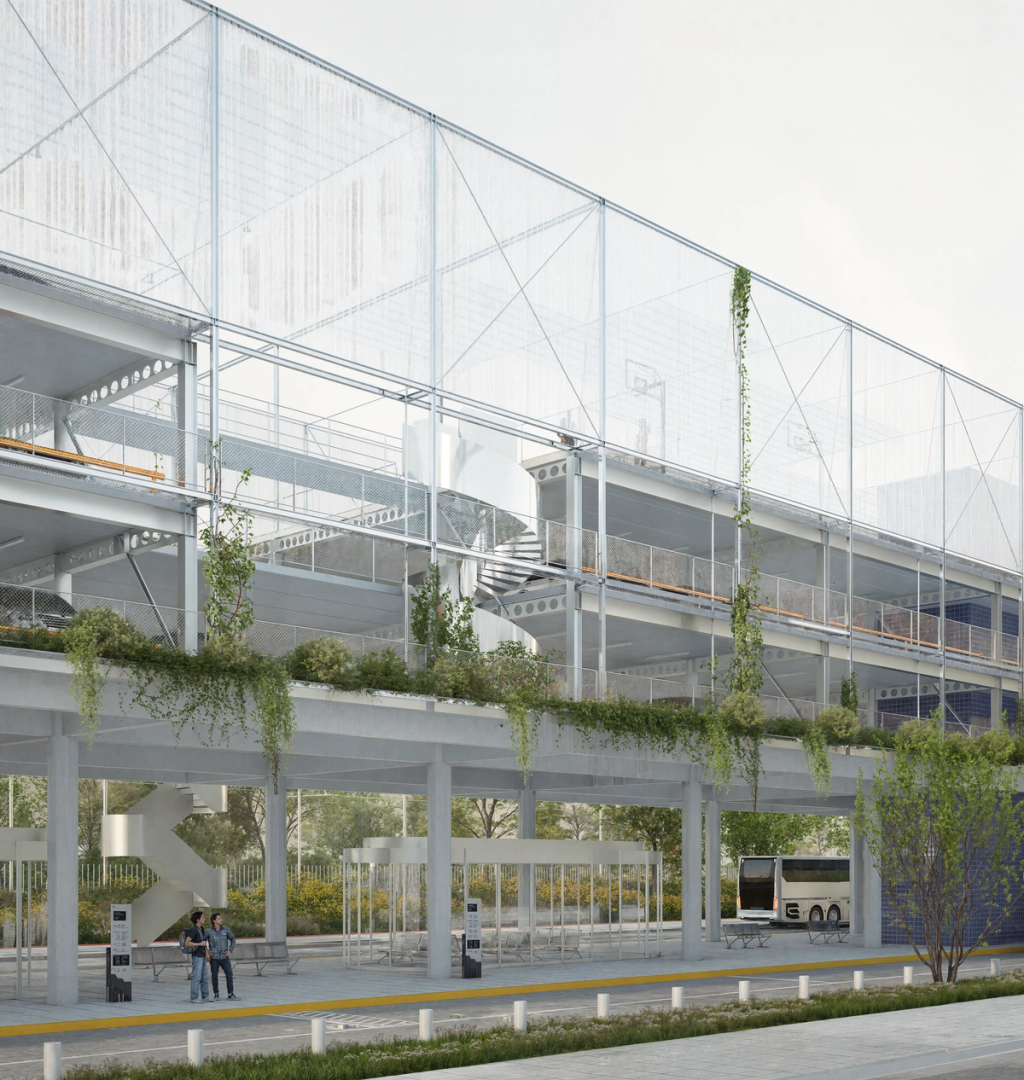
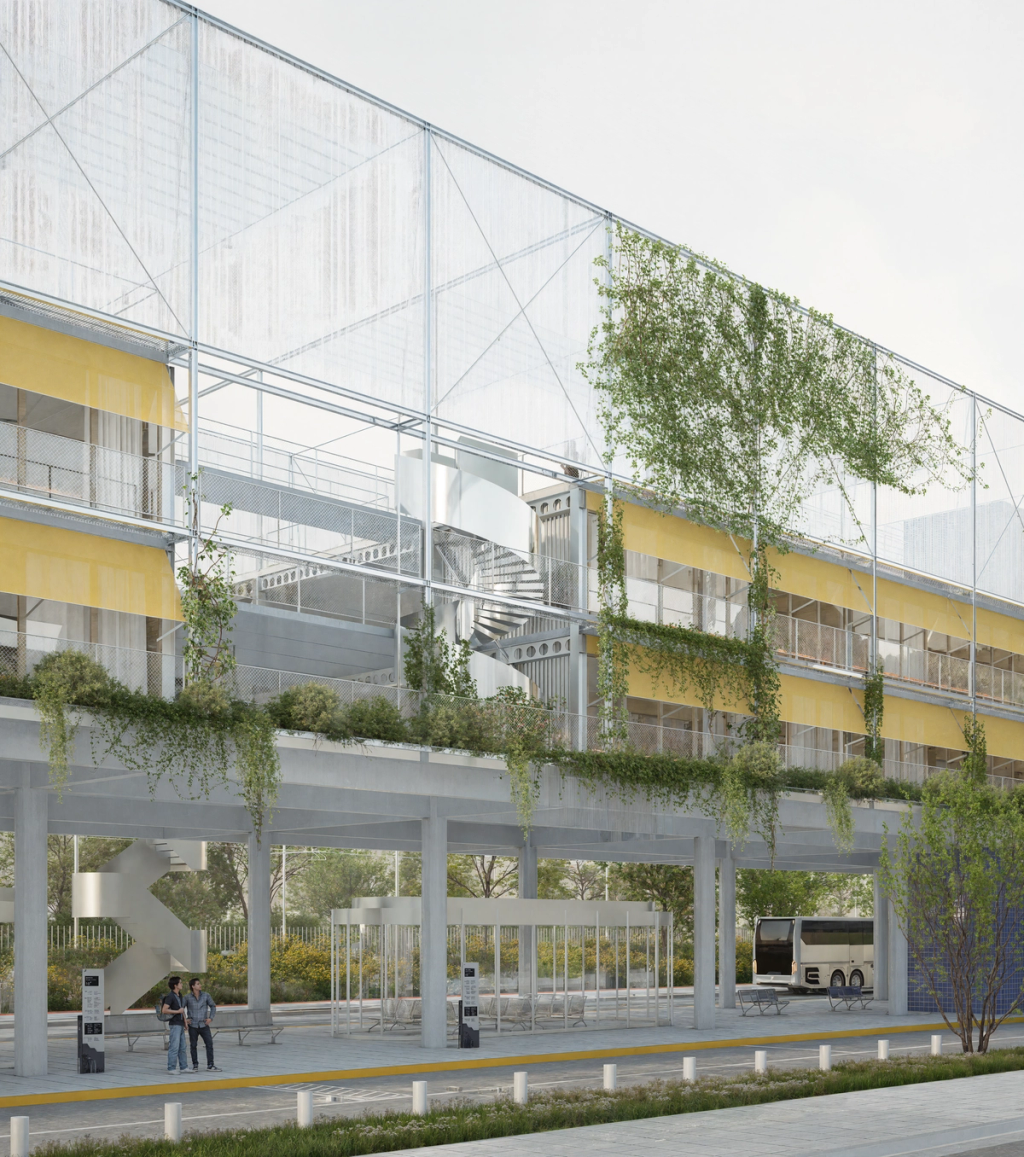
The project envisions the Celje Passenger Centre as a unified mobility hub embedded within a new ecological and urban landscape. Located at the convergence of major infrastructures and everyday city life, the site acts both as an arrival point and a transitional space. The proposal uses this duality to reconnect the fragmented urban fabric divided by the railway and the Voglajna River. A new park forms the heart of the intervention, extending the geometry of the railway lines into landscape trajectories. These lines guide movement, frame key views, and create a continuum between the historic centre, the Voglajna corridor, and the Savinja River. Sightlines toward Celje Castle and St. Joseph’s Church reinforce the relationship with the city’s heritage. The design reinterprets user movement, integrating trains, buses, cars, bicycles, and pedestrians into a seamless system.The building is conceived as a living infrastructure — a robust, adaptable framework designed to evolve with Celje’s changing needs over time. Rather than a fixed, single-purpose object, it operates as an open system, capable of absorbing new programmes and transforming in response to urban, social, and technological shifts. Its initial function as a parking structure and bus terminal represents only the first phase of its lifecycle. The structural grid, floor heights, circulation cores, and load-bearing configuration are deliberately dimensioned to allow a future transition from parking decks to fully habitable spaces. This means that the infrastructure can, over time, become housing, offices, studios, or mixed-use functions — without the need for demolition. The building therefore behaves as a long-term urban asset, minimizing embodied carbon and maximizing spatial resilience. Green façades reinforce this idea of a living organism: they are designed to grow, thicken, and mature, gradually transforming the building into a vertical landscape. As vegetation colonizes the structure, the façade becomes a climatic buffer that improves comfort, supports biodiversity, and acts as a soft interface to future residential units. The roof is conceived as an extension of the public realm — an elevated terrain that continues the park’s topography. It functions as a new civic platform, hosting sports areas, cultural programmes, gardens, and social spaces. In the future, this rooftop can accommodate additional public buildings, lightweight structures, or even mobility innovations such as a cable car. By bringing public life onto the building, the architecture dissolves the boundary between infrastructure and urban space. The project therefore establishes a hybrid system where mobility, landscape, and public programmes cohabit within a single transformable framework. Over decades, the building may shift from serving cars to serving people: a gradual, sustainable transition aligned with evolving mobility patterns and ecological priorities. In this sense, the structure is not only future-proof — it actively anticipates change. It embeds the capacity for growth, adaptation, and reprogramming, ensuring long-term relevance and reducing environmental impact. As the city evolves, the building can mature with it, transforming from a transport infrastructure into a vibrant, inhabited piece of the city. This living-infrastructure approach turns flexibility into a core architectural value and positions the project as a resilient, regenerative urban system for Celje’s future.
Type: Infrastructure/Landscape Status: 4th Prize, Honourable mention International Competition Size: 12.370m2 GBA + 23.222m2 landscape
Location: Celje, Eslovenia
Collaborators: Mach office