73
Competition Primary School Mstetice, 2025,
Mstetice,CZ
2025
Mstetice,CZ
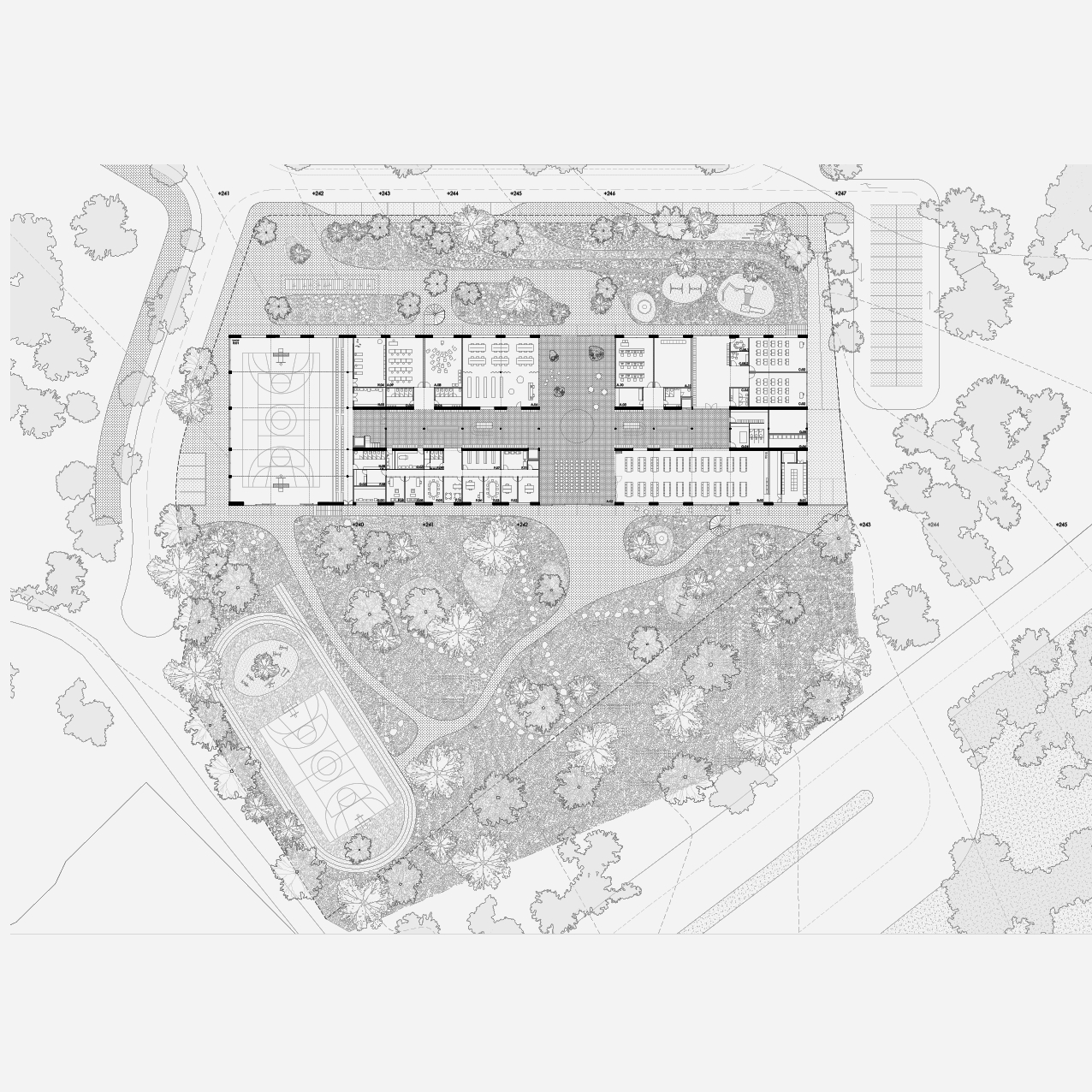
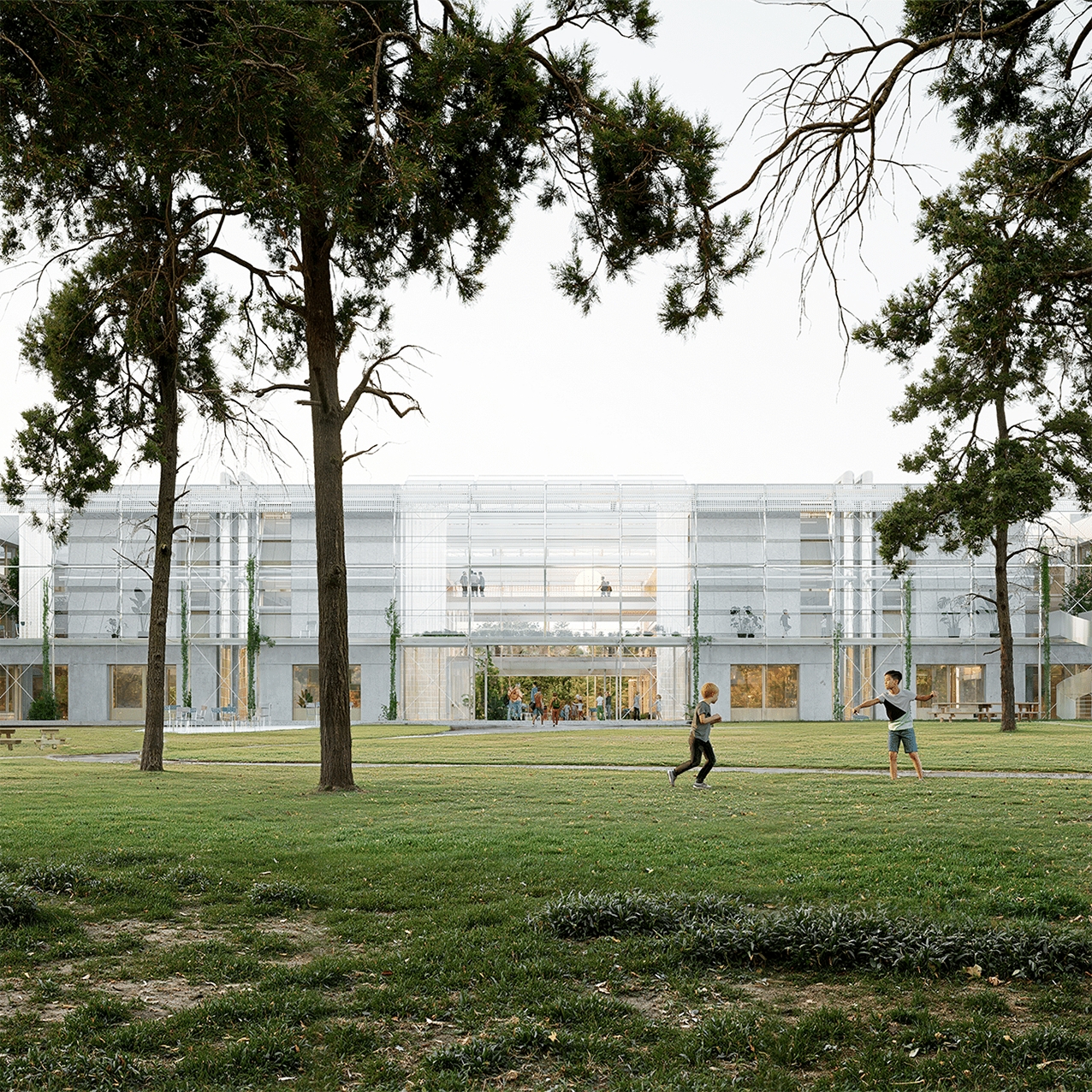
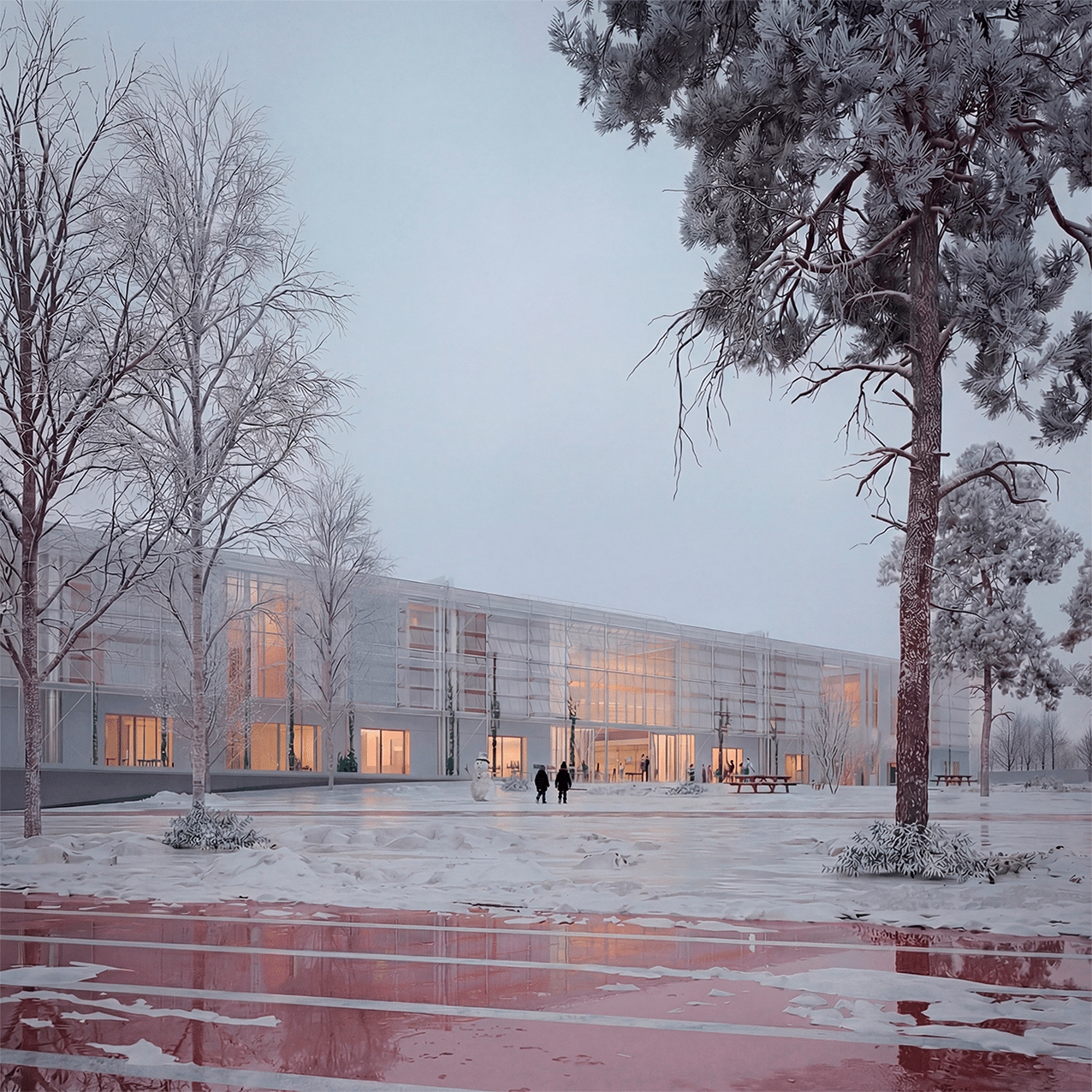
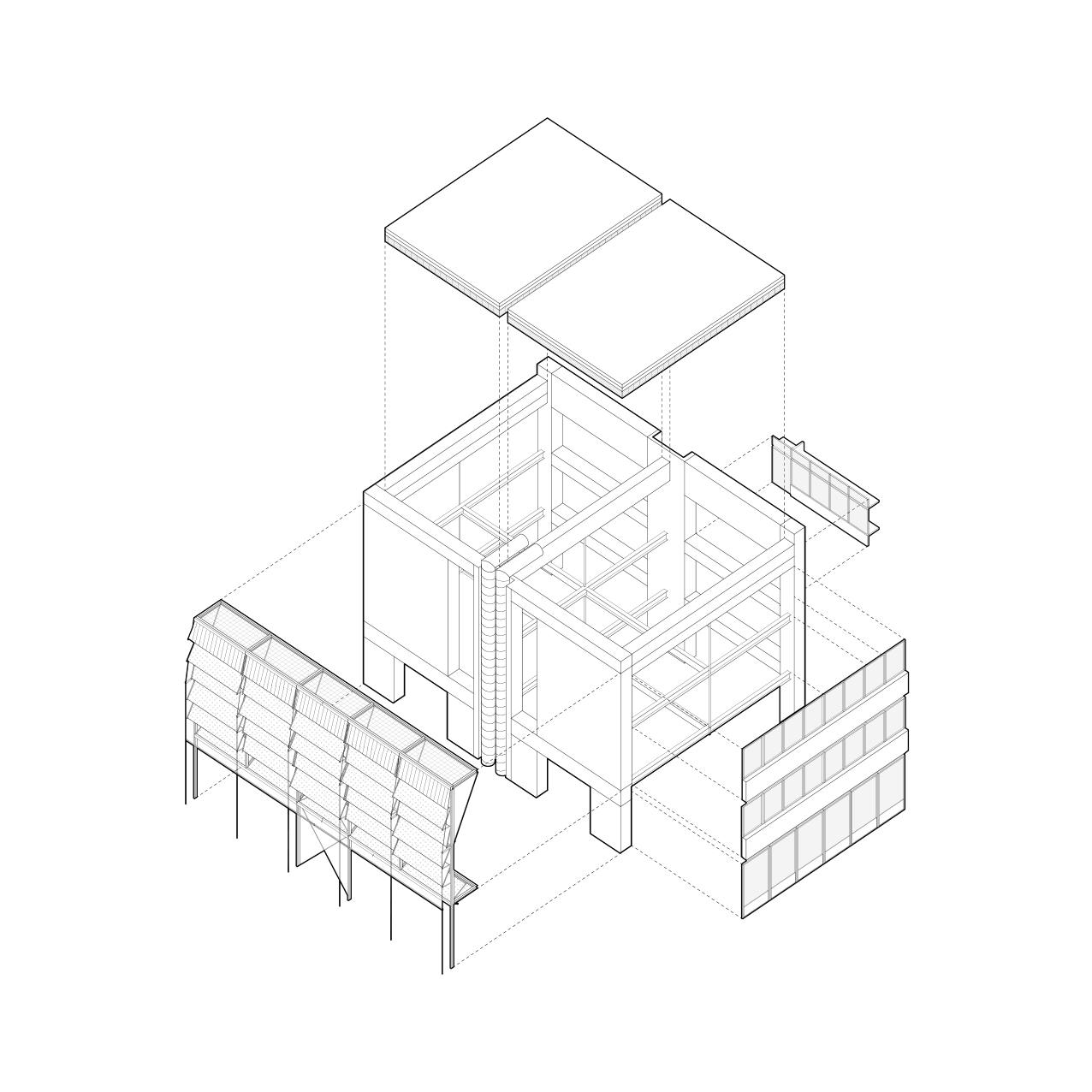
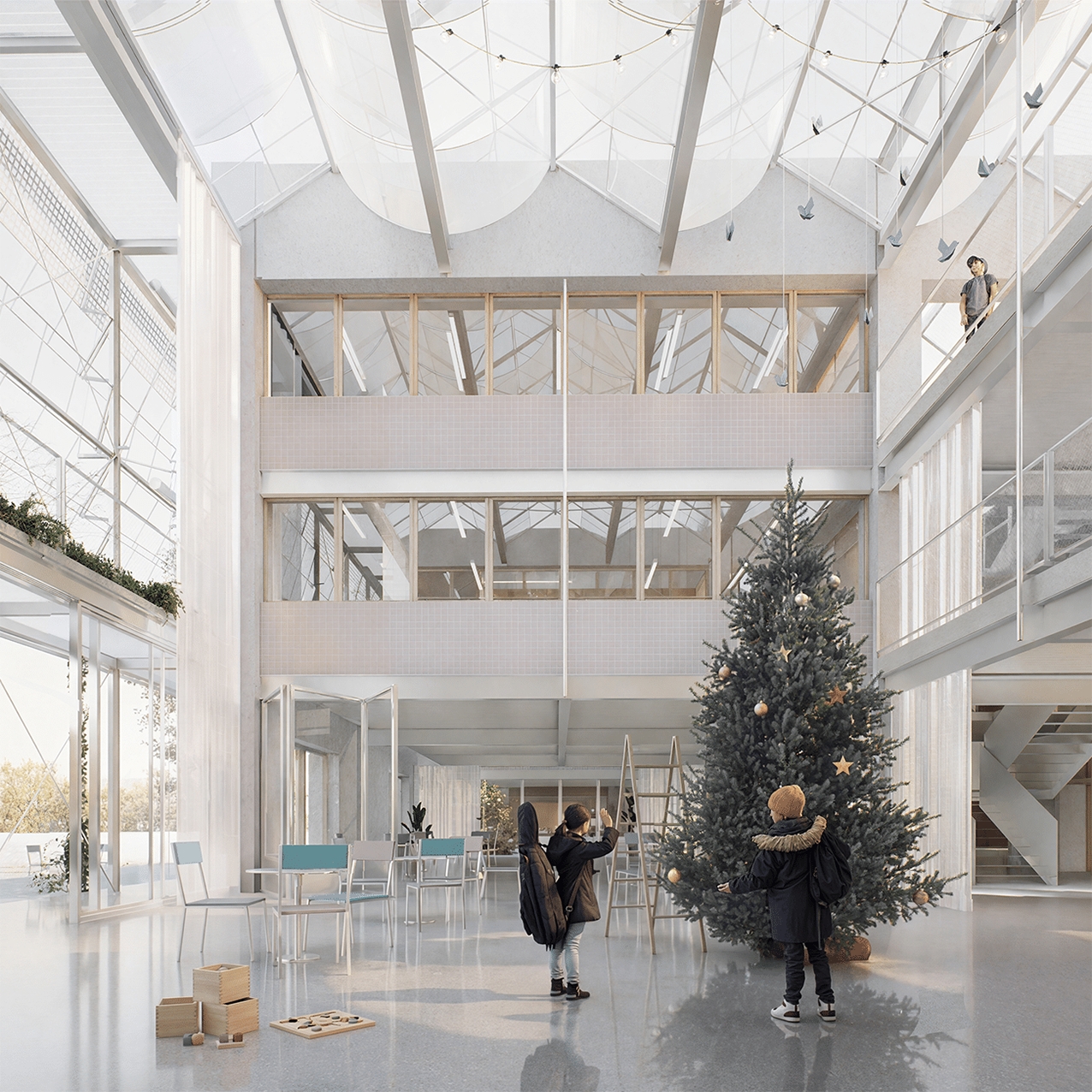
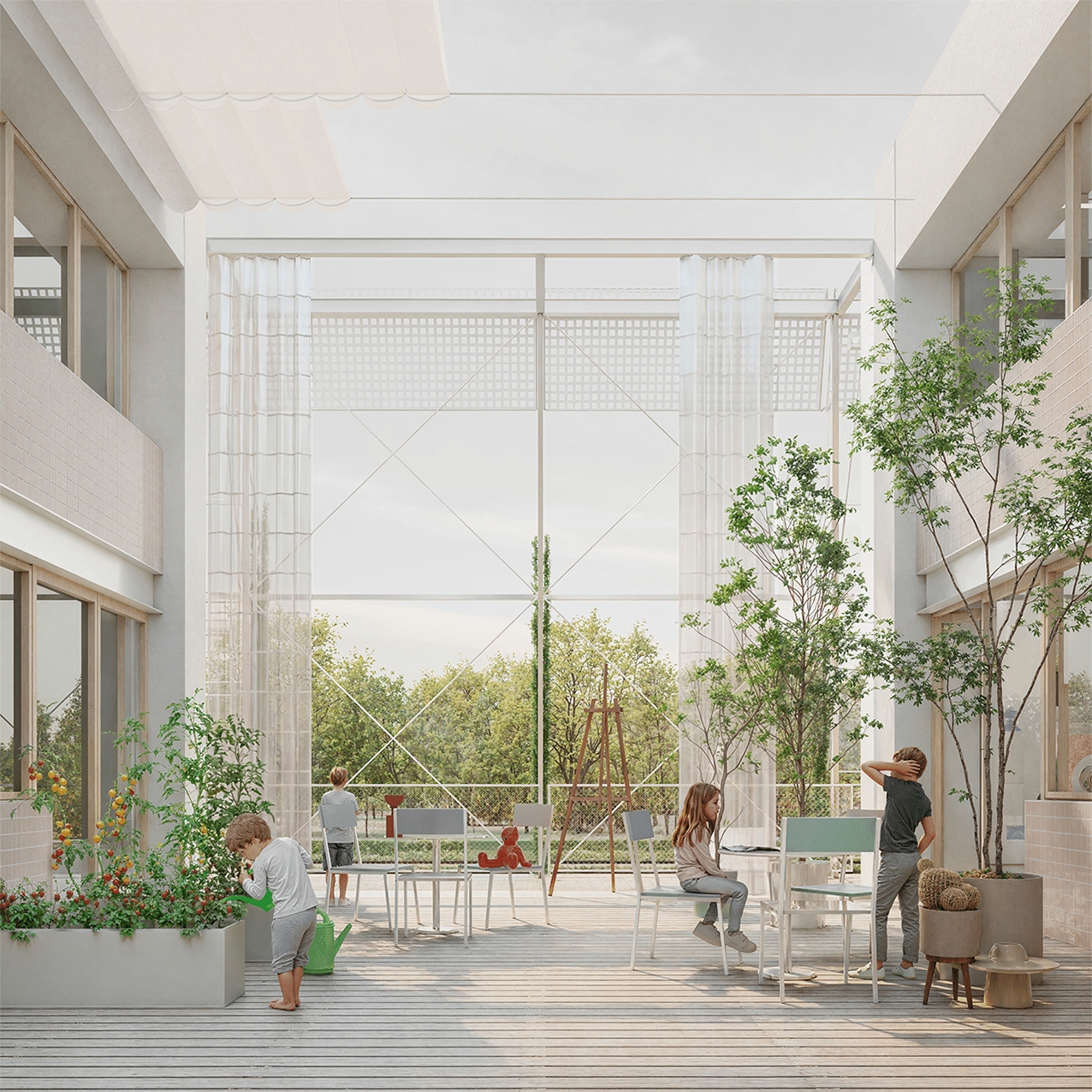
The proposal for the new Primary School in Mstětice positions the building as a social catalyst for the emerging neighbourhood. The project places collective life at the centre of its architectural strategy, creating a learning environment where education extends beyond the classroom and unfolds through everyday encounters.
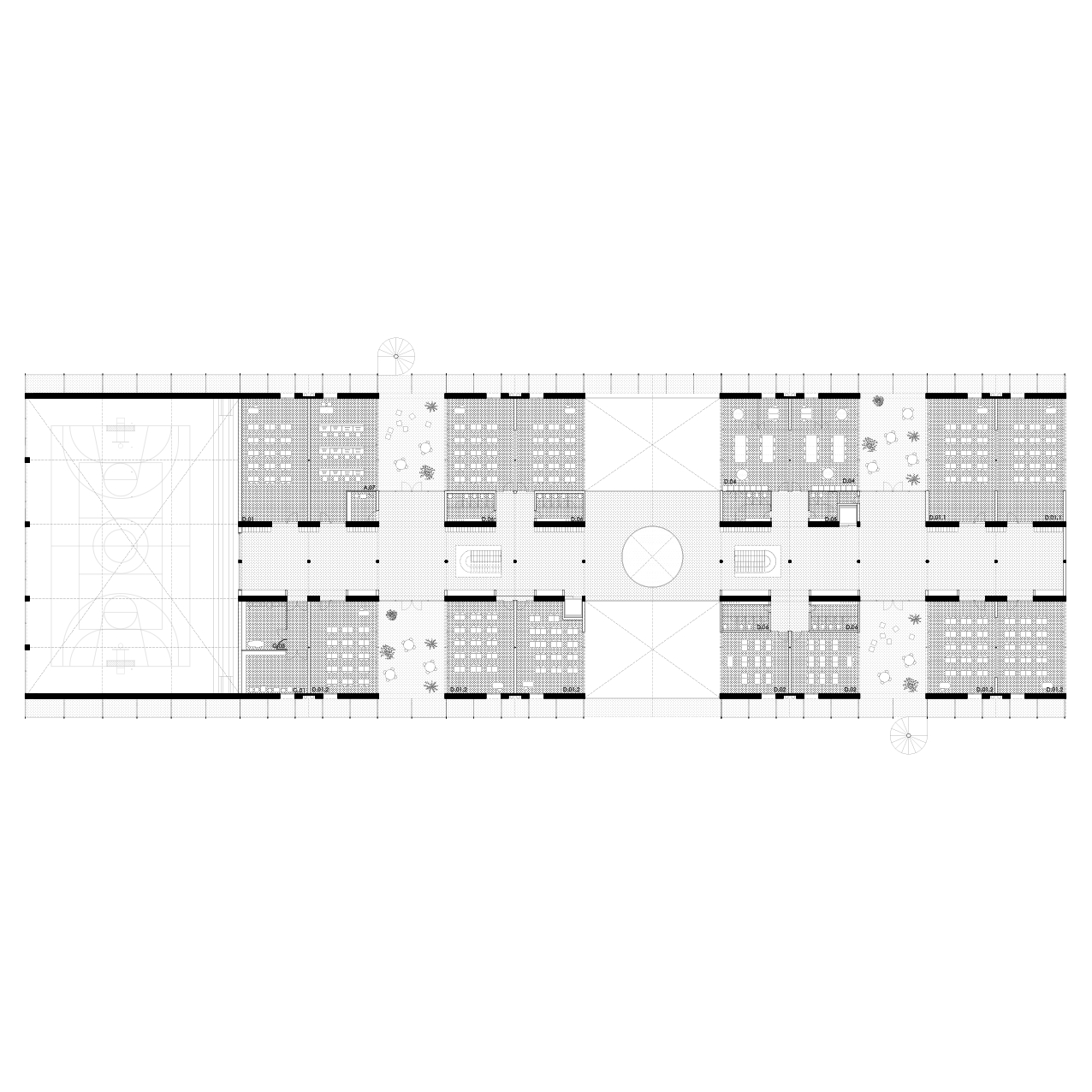
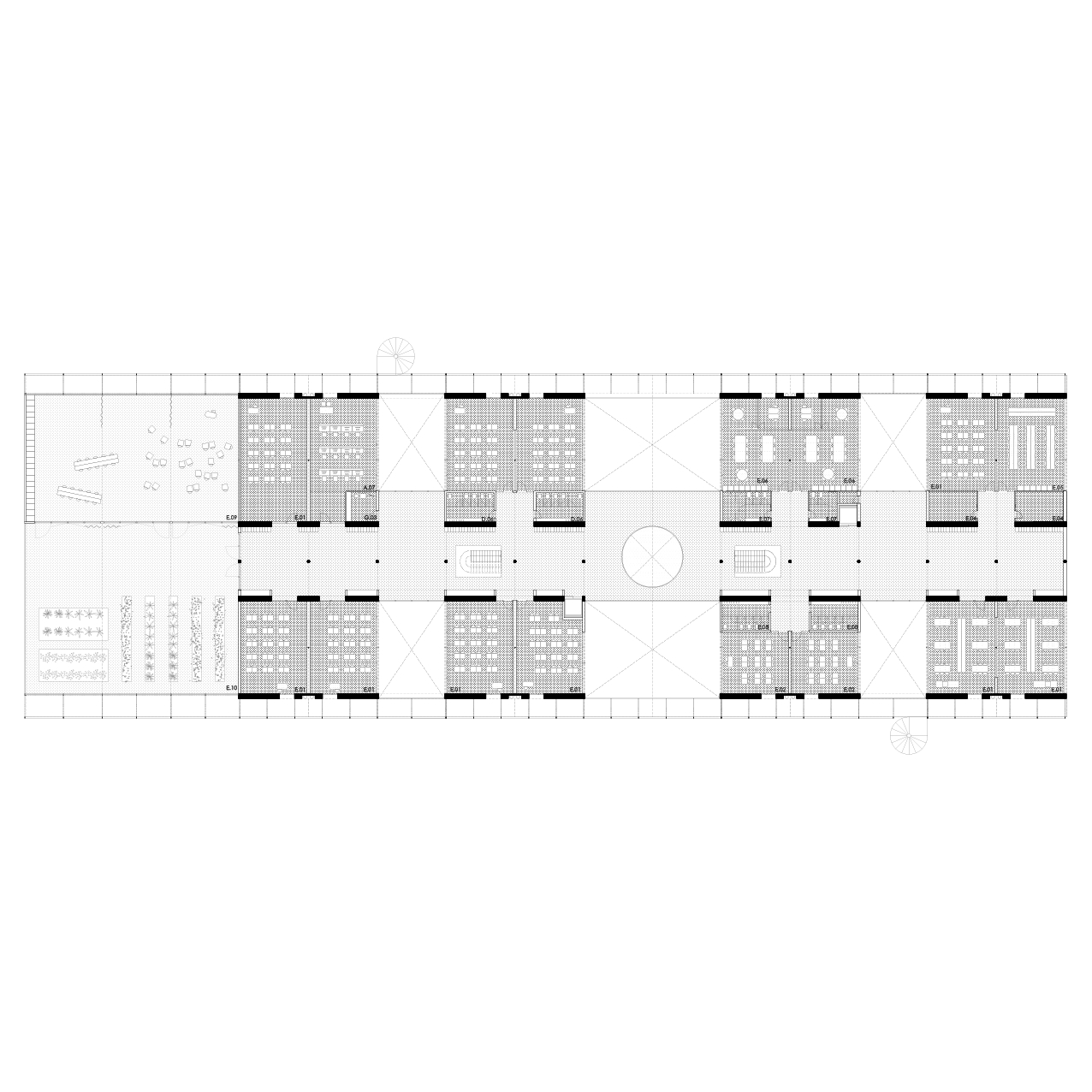
The school is conceived as a compact linear volume that efficiently organises the programme while minimising its footprint. Within this clear geometry, the internal structure is defined by a cross-shaped circulation system that acts as the primary spatial organiser of the building. This spatial cross establishes clear orientation, distributes movement, and connects the different educational programmes.
At its intersection, the main entrance and the auditorium form a generous civic threshold: a permeable, welcoming space linking the urban frontage with the green landscape behind the building. This central void allows the school to operate not only as an educational facility but also as a shared social venue for the neighbourhood.
The architectural experience of the school is structured through a sequence of hybrid semi-interior spaces—patios, circulation areas, and intermediate learning environments—that mediate between classrooms and the exterior. These spaces extend pedagogical activities beyond formal teaching rooms, fostering interaction, informal learning, and community life throughout the building.
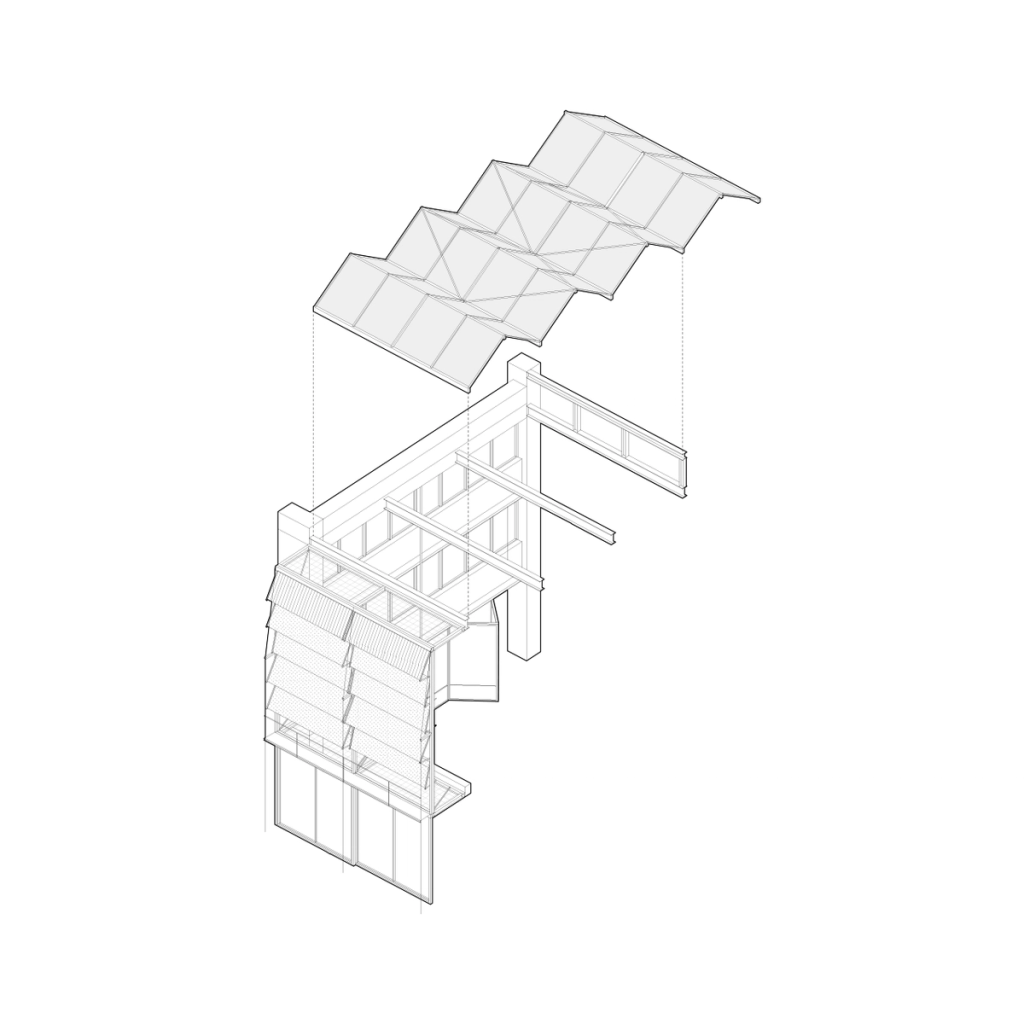
Flexibility is embedded in the organisational logic of the project. Compact structural cores combined with lightweight partition systems allow classrooms and shared spaces to adapt to evolving pedagogical models. The modular structure also supports future growth, enabling logical expansion both vertically and horizontally.
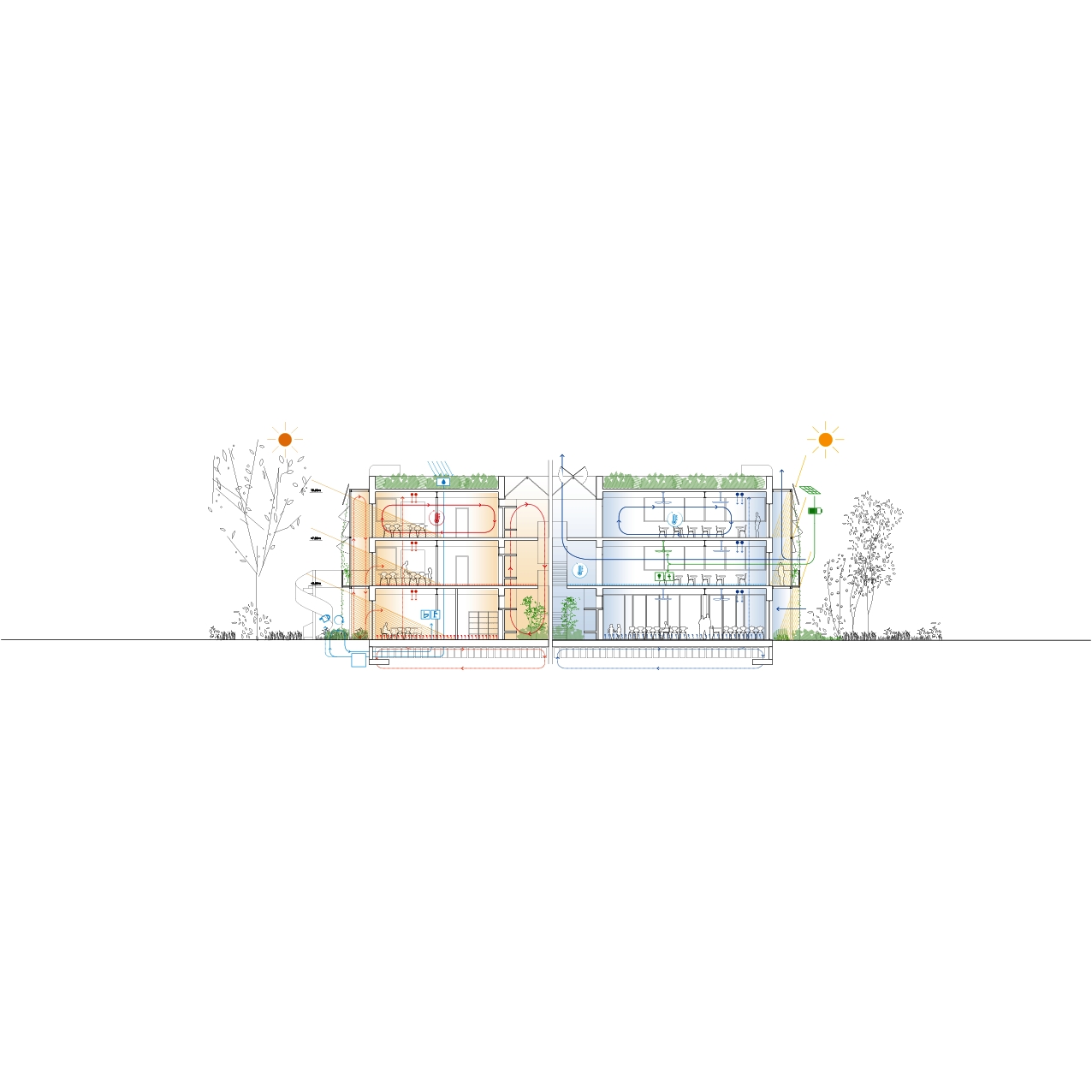
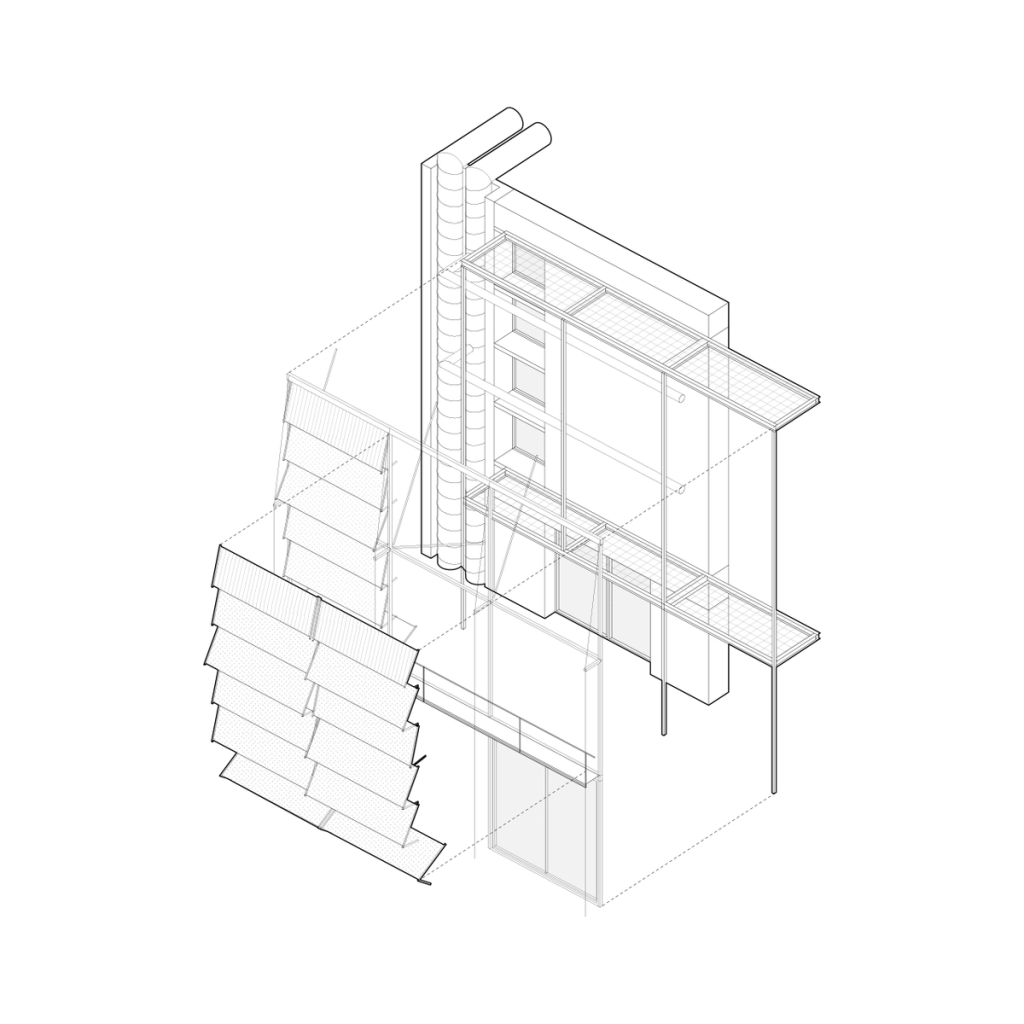
The environmental strategy is integrated directly into the architectural concept. A double-layered façade functions as a Trombe wall, providing passive solar gain and significant thermal inertia. Thick concrete envelopes stabilise interior temperatures, while classrooms orient toward buffered semi-interior spaces that enhance daylight, ventilation, and seasonal adaptability. Integrated vegetation further improves microclimatic comfort and strengthens the relationship between architecture and landscape.
The structural system combines durability with circular construction principles. Primary façades and vertical structures are realised in on-site cast cyclopean concrete incorporating excavated site stone, while secondary elements employ lightweight, modular systems in steel and timber. This hybrid approach ensures robustness, adaptability, and the capacity for future transformation.
The result is a resilient and flexible school building where spatial continuity, environmental intelligence, and constructive clarity support an open and evolving model of education.
Type: Infrastructure/Landscape Status: Competition Location: Mstetice, Czech Republic
Collaborators: Mach office